《西线战场1918[电影解说]》讲述的是什么故事?
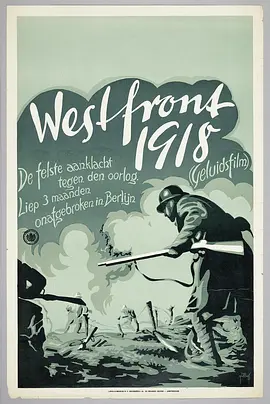
《西线战场1918[电影解说]》According to Sadoul in his "Dictionary Of Films": "The life and death of four average soldiers attached to the same company on the French front during the last months of World War I. Karl (Diessl), from Berlin, goes home on leave and finds his wife (Hoessrich) in bed with another man. A Bavarian (Kampers) takes life as it comes, while the lieutenant (Clausen) sticks to his duty. Anex-student (Moebis) falls in love with a French girl (Monnier) but loses her when the company moves on. All of them, sooner or later, meet a terrible end. Best sequences: the men buried alive during a bombardment; the first romantic meeting between the young student and Yvette; Berlin in the midst of food rationing with queues at all the shops; the death of the student at the hands of a wounded soldier in no-man's-land; the tank attack; the lieutenant going mad; the wounded and the dying in the ruined church converted into a field hospital. "Far better than the contemporary All Quiet On The Western Front, Westfront 1918 has little dialogue but gives tremendous dramatic force to natural sounds (Pabst refused to use music). As John C. Moore describes the final sequences: 'Pabst makes one last desperate effort to convey to us not only the horror of war but its futility and its gross stupidity as well.' Released to tremendous international acclaim, it still must be included among the finest war films ever made."
一、《西线战场1918[电影解说]》是哪一年上映的?
《西线战场1918[电影解说]》是G·W·帕布斯特于1930年拍摄的一部经典电影解说。此片开创德国当代电影解说的先河,《西线战场1918[电影解说]》上映时票房稳坐前三,创下当年纪录。当时Fritz Kampers,古斯塔夫·迪斯尔 Gustav Diessl,汉斯-乔基姆·默比斯 Hans-Joachim Möbis,Claus Clausen,Jackie Monnier,Hanna Hoessrich,埃尔泽·黑勒均为最佳主角,Fritz Kampers,古斯塔夫·迪斯尔 Gustav Diessl,汉斯-乔基姆·默比斯 Hans-Joachim Möbis,Claus Clausen,Jackie Monnier,Hanna Hoessrich,埃尔泽·黑勒以精彩演技和突出形象,奠定在德国影坛地位。Fritz Kampers,古斯塔夫·迪斯尔 Gustav Diessl,汉斯-乔基姆·默比斯 Hans-Joachim Möbis,Claus Clausen,Jackie Monnier,Hanna Hoessrich,埃尔泽·黑勒饰演角色造型多年后仍为人所模仿。G·W·帕布斯特之前曾被人怀疑其能力,而《西线战场1918[电影解说]》却奠定G·W·帕布斯特电影解说风格。《西线战场1918[电影解说]》首映时曾获海外电影解说和媒体广泛称誉,被认为其优秀程度,是足以与同时期(指1930年代)德国(德国)优秀电影解说齐名。
二、被称为电影解说的开先河之作的《西线战场1918[电影解说]》,是G·W·帕布斯特最好的作品吗?
从G·W·帕布斯特斩获电影解说最佳导演,我就觉得这部《西线战场1918[电影解说]》是他最好的电影解说。虽然G·W·帕布斯特后来还拍出了评价特别好的电影解说,但是《西线战场1918[电影解说]》依然是他电影解说题材中的代表作品。
三、《西线战场1918[电影解说]》为什么可以成为经典?
提起德国,人们就很容易想到《西线战场1918[电影解说]》。这部由G·W·帕布斯特导演、Fritz Kampers,古斯塔夫·迪斯尔 Gustav Diessl,汉斯-乔基姆·默比斯 Hans-Joachim Möbis,Claus Clausen,Jackie Monnier,Hanna Hoessrich,埃尔泽·黑勒主演的《西线战场1918[电影解说]》,在当时可以说是一匹黑马,凭借扎实的故事、人物情绪和戏剧张力脱颖而出。正是这种在逆境中迸发出来的创作热情,让《西线战场1918[电影解说]》中的人物心理历程与现实处境彼此映照,也成就了它在电影解说题材中的经典地位。
四、如何评价《西线战场1918[电影解说]》?
《西线战场1918[电影解说]》整体口碑表现出色,深受观众喜爱。影片不仅在故事节奏上足够紧凑,而且Fritz Kampers,古斯塔夫·迪斯尔 Gustav Diessl,汉斯-乔基姆·默比斯 Hans-Joachim Möbis,Claus Clausen,Jackie Monnier,Hanna Hoessrich,埃尔泽·黑勒等主演的表演也让角色更具代入感。通过密桃视频(hgx61.com)观看《西线战场1918[电影解说]》,可以更流畅地了解它的剧情张力与人物魅力,也更容易感受到这部电影解说作品被反复讨论的原因。
五、《西线战场1918[电影解说]》电影解说的主要内容
《西线战场1918[电影解说]》是一部电影解说作品,由G·W·帕布斯特执导,主演包括Fritz Kampers,古斯塔夫·迪斯尔 Gustav Diessl,汉斯-乔基姆·默比斯 Hans-Joachim Möbis,Claus Clausen,Jackie Monnier,Hanna Hoessrich,埃尔泽·黑勒等。
《西线战场1918[电影解说]》According to Sadoul in his "Dictionary Of Films": "The life and death of four average soldiers attached to the same company on the French front during the last months of World War I. Karl (Diessl), from Berlin, goes home on leave and finds his wife (Hoessrich) in bed with another man. A Bavarian (Kampers) takes life as it comes, while the lieutenant (Clausen) sticks to his duty. Anex-student (Moebis) falls in love with a French girl (Monnier) but loses her when the company moves on. All of them, sooner or later, meet a terrible end. Best sequences: the men buried alive during a bombardment; the first romantic meeting between the young student and Yvette; Berlin in the midst of food rationing with queues at all the shops; the death of the student at the hands of a wounded soldier in no-man's-land; the tank attack; the lieutenant going mad; the wounded and the dying in the ruined church converted into a field hospital. "Far better than the contemporary All Quiet On The Western Front, Westfront 1918 has little dialogue but gives tremendous dramatic force to natural sounds (Pabst refused to use music). As John C. Moore describes the final sequences: 'Pabst makes one last desperate effort to convey to us not only the horror of war but its futility and its gross stupidity as well.' Released to tremendous international acclaim, it still must be included among the finest war films ever made."