《七个驼背人的塔[电影解说]》讲述的是什么故事?
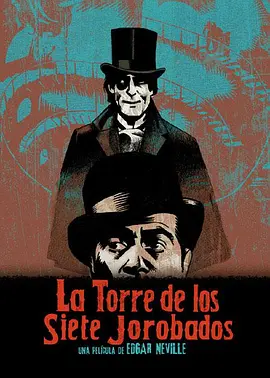
《七个驼背人的塔[电影解说]》本片是西班牙经典幻想片之一。当年美国演员查理-卓别林(Charlie Chaplin)看过此片后称西班牙导演Edgar Neville是“他所遇见过的最会讲故事的人”(“the best storyteller he ever met”),并对此片的评价甚高。《乡村之声》也对此片有过详尽的介绍。 La Torre de los Siete Jorobados is a 1944 Spanish mystery film directed by Edgar Neville. It is based on a novel by Emilio Carrere. In 19th century Madrid a young man plays roulette. A mysterious character helps him by pointing with his walking stick the next number where the ball is going to fall. The protagonist is the only one able to see him. The mysterious man turn out to be the ghost of an archaeologist and ask the young man to defend his daughter from a gang of hunchbacks. Explore the labyrinthian depths and secret alleys of the Walter Reade's annual survey "Spanish Cinema Now" (December 8 through 26), and you'll find a mini retrospective devoted to Edgar Neville (1899–1967). The aristocratic Neville was a friend of Luis Bunuel and Charlie Chaplin (whom he met while in Hollywood directing Spanish-language talkies for MGM), with a reputation as a raconteur that's fully justified by the playful narratives of his best-known movies. Those showing include Life Hanging by a Thread (1945), a whimsical comedy of alternate destiny; two murder mysteries: the farcical Carnival Sunday (1945) and philosophical The Crime on Bordadores Street (1946); as well as a neorealist account of a demobilized cavalryman, The Last Horse (1950), and a color musical, Flamenco (1952). The most fabulous of Neville's fantasies is The Tower of the Seven Hunchbacks (1944), a supernatural shaggy-dog story in which, egged on by a dignified one-eyed ghost, a handsome if clueless Madrid bon vivant stumbles into a lost subterranean world. This secret city, built by Jews escaping the Inquisition, is populated by a cabal of sinister, coin-counterfeiting kyphotics, as well as a number of cobwebbed mummies and a mad archaeologist. The movie was evidently based on a horror novel but Neville's attitude toward this fantastic material is beyond bemused. (Village Voice)
一、《七个驼背人的塔[电影解说]》是哪一年上映的?
《七个驼背人的塔[电影解说]》是埃德加·内维列于1944年拍摄的一部经典电影解说。此片开创西班牙当代电影解说的先河,《七个驼背人的塔[电影解说]》上映时票房稳坐前三,创下当年纪录。当时安东尼奥·卡萨尔,Isabel de Pomés,Guillermo Marín,Félix de Pomés,胡莉娅·拉霍斯,Julia Pachelo,Manolita Morán,Antonio Riquelme,José Franco均为最佳主角,安东尼奥·卡萨尔,Isabel de Pomés,Guillermo Marín,Félix de Pomés,胡莉娅·拉霍斯,Julia Pachelo,Manolita Morán,Antonio Riquelme,José Franco以精彩演技和突出形象,奠定在西班牙影坛地位。安东尼奥·卡萨尔,Isabel de Pomés,Guillermo Marín,Félix de Pomés,胡莉娅·拉霍斯,Julia Pachelo,Manolita Morán,Antonio Riquelme,José Franco饰演角色造型多年后仍为人所模仿。埃德加·内维列之前曾被人怀疑其能力,而《七个驼背人的塔[电影解说]》却奠定埃德加·内维列电影解说风格。《七个驼背人的塔[电影解说]》首映时曾获海外电影解说和媒体广泛称誉,被认为其优秀程度,是足以与同时期(指1944年代)西班牙(西班牙)优秀电影解说齐名。
二、被称为电影解说的开先河之作的《七个驼背人的塔[电影解说]》,是埃德加·内维列最好的作品吗?
从埃德加·内维列斩获电影解说最佳导演,我就觉得这部《七个驼背人的塔[电影解说]》是他最好的电影解说。虽然埃德加·内维列后来还拍出了评价特别好的电影解说,但是《七个驼背人的塔[电影解说]》依然是他电影解说题材中的代表作品。
三、《七个驼背人的塔[电影解说]》为什么可以成为经典?
提起西班牙,人们就很容易想到《七个驼背人的塔[电影解说]》。这部由埃德加·内维列导演、安东尼奥·卡萨尔,Isabel de Pomés,Guillermo Marín,Félix de Pomés,胡莉娅·拉霍斯,Julia Pachelo,Manolita Morán,Antonio Riquelme,José Franco主演的《七个驼背人的塔[电影解说]》,在当时可以说是一匹黑马,凭借扎实的故事、人物情绪和戏剧张力脱颖而出。正是这种在逆境中迸发出来的创作热情,让《七个驼背人的塔[电影解说]》中的人物心理历程与现实处境彼此映照,也成就了它在电影解说题材中的经典地位。
四、如何评价《七个驼背人的塔[电影解说]》?
《七个驼背人的塔[电影解说]》整体口碑表现出色,深受观众喜爱。影片不仅在故事节奏上足够紧凑,而且安东尼奥·卡萨尔,Isabel de Pomés,Guillermo Marín,Félix de Pomés,胡莉娅·拉霍斯,Julia Pachelo,Manolita Morán,Antonio Riquelme,José Franco等主演的表演也让角色更具代入感。通过密桃视频(hgx61.com)观看《七个驼背人的塔[电影解说]》,可以更流畅地了解它的剧情张力与人物魅力,也更容易感受到这部电影解说作品被反复讨论的原因。
五、《七个驼背人的塔[电影解说]》电影解说的主要内容
《七个驼背人的塔[电影解说]》是一部电影解说作品,由埃德加·内维列执导,主演包括安东尼奥·卡萨尔,Isabel de Pomés,Guillermo Marín,Félix de Pomés,胡莉娅·拉霍斯,Julia Pachelo,Manolita Morán,Antonio Riquelme,José Franco等。
《七个驼背人的塔[电影解说]》本片是西班牙经典幻想片之一。当年美国演员查理-卓别林(Charlie Chaplin)看过此片后称西班牙导演Edgar Neville是“他所遇见过的最会讲故事的人”(“the best storyteller he ever met”),并对此片的评价甚高。《乡村之声》也对此片有过详尽的介绍。 La Torre de los Siete Jorobados is a 1944 Spanish mystery film directed by Edgar Neville. It is based on a novel by Emilio Carrere. In 19th century Madrid a young man plays roulette. A mysterious character helps him by pointing with his walking stick the next number where the ball is going to fall. The protagonist is the only one able to see him. The mysterious man turn out to be the ghost of an archaeologist and ask the young man to defend his daughter from a gang of hunchbacks. Explore the labyrinthian depths and secret alleys of the Walter Reade's annual survey "Spanish Cinema Now" (December 8 through 26), and you'll find a mini retrospective devoted to Edgar Neville (1899–1967). The aristocratic Neville was a friend of Luis Bunuel and Charlie Chaplin (whom he met while in Hollywood directing Spanish-language talkies for MGM), with a reputation as a raconteur that's fully justified by the playful narratives of his best-known movies. Those showing include Life Hanging by a Thread (1945), a whimsical comedy of alternate destiny; two murder mysteries: the farcical Carnival Sunday (1945) and philosophical The Crime on Bordadores Street (1946); as well as a neorealist account of a demobilized cavalryman, The Last Horse (1950), and a color musical, Flamenco (1952). The most fabulous of Neville's fantasies is The Tower of the Seven Hunchbacks (1944), a supernatural shaggy-dog story in which, egged on by a dignified one-eyed ghost, a handsome if clueless Madrid bon vivant stumbles into a lost subterranean world. This secret city, built by Jews escaping the Inquisition, is populated by a cabal of sinister, coin-counterfeiting kyphotics, as well as a number of cobwebbed mummies and a mad archaeologist. The movie was evidently based on a horror novel but Neville's attitude toward this fantastic material is beyond bemused. (Village Voice)